



How Much Does a Walk-In Shower Cost in Illinois? (2026 Pricing Guide)
On This Page Introduction Conclusion Related Services Frequently Asked Questions Ready to Transform Your Bathroom? Schedule Your Free In-Home Estimate Today Free In-Home Estimate
Most people think of falls as something that happens outside — on icy sidewalks or uneven pavement. But the bathroom is statistically one of the highest-risk rooms in any home for older adults. The combination of hard surfaces, water, and the physical demands of stepping over a tub edge creates a hazard that compounds quickly with age.
Reduced balance, hip stiffness, and slower reaction times all make the standard bathtub a genuine obstacle. The National Council on Aging reports that falls are the leading cause of fatal and non-fatal injuries for Americans over 65, and bathroom falls specifically account for a large share of those incidents. The injuries aren’t always minor — hip fractures, head injuries, and extended hospital stays are all real outcomes.
Addressing this isn’t about assuming the worst. It’s about removing unnecessary risk from a daily routine that should feel safe and dignified.
A walk-in shower — one with a low or completely flush threshold — is widely considered the best shower for seniors who want independence without sacrificing style. There’s no step to navigate, no tub wall to swing a leg over, and the open layout makes it far easier to move with a walker or cane if needed.
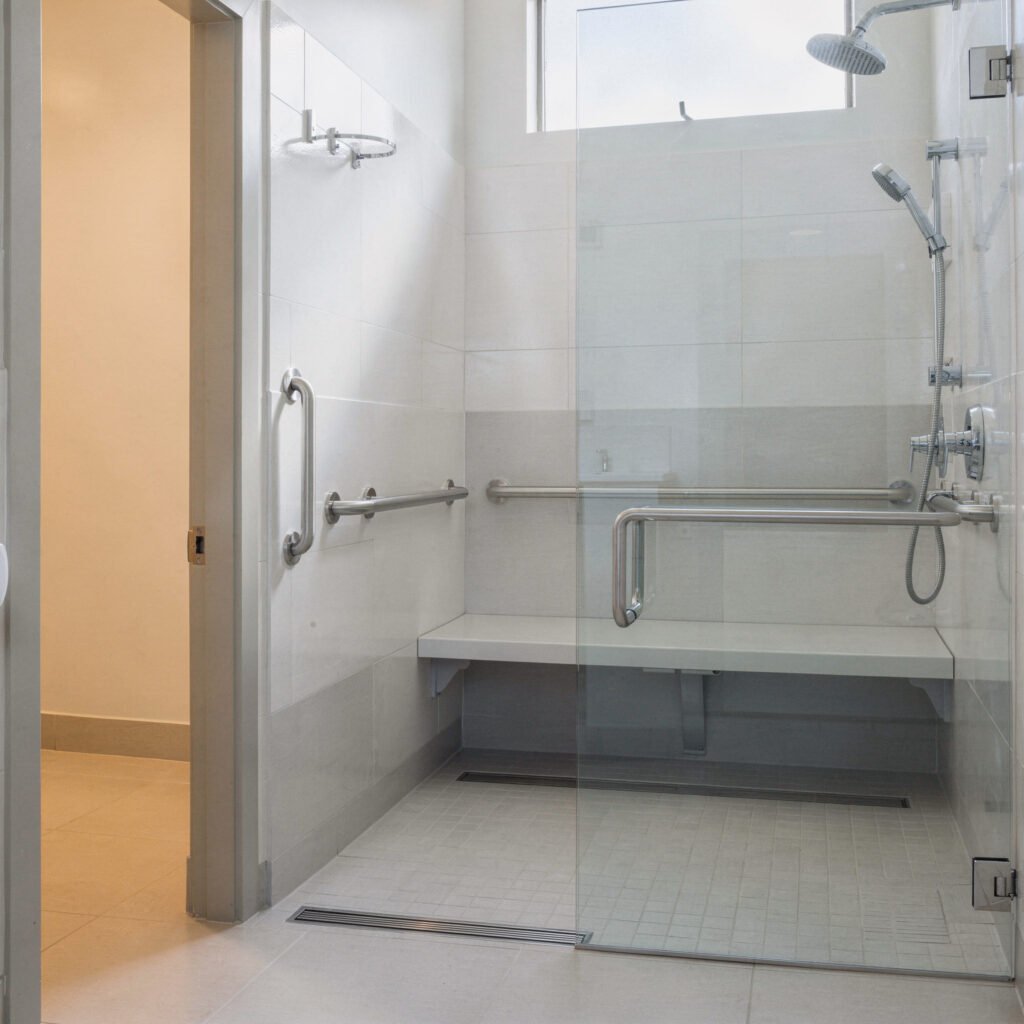
Walk-in showers also offer the most flexibility for adding safety features. You can design the space around a built-in bench, multiple grab bars, and a handheld showerhead without it looking clinical. Modern tile options give these showers a clean, attractive finish that fits any bathroom aesthetic.
For homeowners replacing an old tub, a tub-to-shower conversion in Libertyville, IL can make daily bathing more accessible. Depending on the bathroom layout, the new shower may fit within the existing bathtub footprint. Planning the entrance, seating, and support features together helps create a bathroom that works better now and can accommodate changing mobility needs.
A curbless shower — sometimes called a zero-entry or barrier-free shower — takes the walk-in concept one step further. The shower floor sits completely flush with the bathroom floor, eliminating even the low lip that standard walk-in showers sometimes include. Water is controlled through proper sloping and a linear drain rather than a raised curb.
This design is the gold standard for aging-in-place accessibility. It accommodates wheelchairs and rollators without any modifications, and it removes the single most common trip hazard in the shower — the step-over threshold. For seniors who want to stay in their home long-term, a curbless shower is a smart investment that adds real value to the property as well.
Installation requires proper waterproofing and drain placement, which is why choosing an experienced contractor matters. When done right, a curbless shower is both beautiful and fully functional for decades.
Walk-in tubs feature a door built into the side of the tub, so you step in at floor level rather than swinging a leg over the wall. Once inside, you close the door and fill the tub. They’re designed specifically for people who want the therapeutic benefits of a full bath — warm water for joint pain, hydrotherapy jets — without the climbing risk of a standard tub.
Walk-in tubs do come with a practical limitation worth understanding: you have to enter the tub before filling it and wait for it to drain before exiting. For someone with limited mobility, sitting in cooling water while the tub drains can be uncomfortable. They also tend to cost more than a standard walk-in shower conversion.
That said, for seniors dealing with arthritis, chronic pain, or conditions that benefit from soaking, a walk-in tub provides real relief. It’s a better fit for some households than others, and a knowledgeable contractor can help you weigh the trade-offs honestly.
For many families, the single best decision they make is simply removing the standard bathtub and replacing it with an accessible shower. A tub-to-shower conversion eliminates the high step-over threshold that causes so many bathroom falls among older adults. It opens up the floor space, makes daily bathing far easier, and creates a natural opportunity to add safety features from the start.
This type of project is one of the most common requests at EZ Bath N Shower. Homeowners in Grayslake, Waukegan, Crystal Lake, and surrounding communities often have older homes with original tubs that were never designed with aging in mind. Converting that tub to a low-threshold or curbless shower can change how someone uses their bathroom every single day.
The process is faster than most homeowners expect. A full tub-to-shower conversion is typically a one-to-two day job, with minimal disruption to the rest of the home.
The design of the shower matters, but the specific features inside it matter just as much. The best shower for seniors combines the right layout with the right hardware. Here are the features that make the biggest difference:
To plan these features around your bathroom layout and daily needs, explore our aging-in-place bathroom remodeling in Lake County.
Flooring gets less attention than grab bars or benches, but it’s one of the most critical safety elements in any senior-friendly shower. Wet tile without texture is one of the most treacherous surfaces in a home. Choosing the right material from the start prevents problems rather than addressing them after a fall.
The best options for senior shower floors include textured porcelain tile, mosaic tile with smaller grout lines, and purpose-made slip-resistant acrylic bases. Avoid large-format polished tile on shower floors regardless of how it looks on a showroom floor — aesthetics are secondary to function in this context.
The opening system matters more than people expect. Glass shower doors look clean and modern, but frameless hinged doors require enough clearance to swing open — and a wet, unsteady person pushing a door outward while stepping over a threshold is a fall risk. Sliding doors or curtains eliminate that problem entirely.
Curtains on a rod work well in many setups. They’re easy to move, inexpensive to replace, and don’t create a barrier to entry. For curbless showers, a simple half-wall or fixed glass panel on one side can contain water without the hazard of a swinging door.
The right shower depends on the individual’s mobility, the existing bathroom layout, the budget, and how long the homeowner plans to stay in the home. A senior who is fully mobile but wants to plan ahead has different needs than someone currently using a walker or managing a recent hip replacement.
A good contractor will assess the existing space honestly, discuss what’s realistic within the budget, and lay out options without pushing the most expensive one. The goal is a bathroom that works well now and continues to work well as needs change — not a one-size-fits-all product package.
For many homeowners aging in place near Grayslake, IL, a low-threshold or curbless walk-in shower is a practical choice because it reduces or eliminates the need to step over a bathtub wall. Look for slip-resistant flooring, properly anchored grab bars, stable seating, a handheld showerhead, and easy-to-reach temperature controls. The best layout depends on the homeowner’s mobility, available bathroom space, and whether caregiver assistance is needed.
On This Page Introduction Conclusion Related Services Frequently Asked Questions Ready to Transform Your Bathroom? Schedule Your Free In-Home Estimate Today Free In-Home Estimate

On This Page Introduction Conclusion Related Services Frequently Asked Questions Ready to Transform Your Bathroom? Schedule Your Free In-Home Estimate Today Free In-Home Estimate

On This Page Introduction Conclusion Related Services Frequently Asked Questions Ready to Transform Your Bathroom? Schedule Your Free In-Home Estimate Today Free In-Home Estimate