



What Is the Best Shower for Seniors? Safe, Accessible Options for Aging in Place
On This Page Introduction Conclusion Related Services Frequently Asked Questions What shower is best for aging in place near Grayslake IL? For many homeowners aging
One of the biggest complaints homeowners have about bathroom remodels is the disruption. When tile is involved, you’re looking at a multi-day project minimum — laying backer board, setting each tile, waiting for mortar to cure, then grouting, sealing, and waiting again. Depending on the size of the shower and the complexity of the pattern, a tiled shower installation can stretch across an entire week or longer.
Acrylic panels work differently. Large-format sheets are cut to fit your specific shower dimensions and bonded directly to the wall. Most installations wrap up in a single day. That means less time with your bathroom out of commission, less dust in your home, and less labor cost on the final invoice. For families with one bathroom, that speed isn’t just convenient — it’s essential.
The installation process is also less likely to introduce moisture problems. With tile, improper grouting or a missed seal can allow water to work behind the surface over months or years, causing mold and structural damage that doesn’t show up until it’s already serious. Acrylic panels, applied with the right adhesive and properly sealed at seams, create a much more watertight surface from the start.
Ask any homeowner who has tile in their shower what they hate most about it, and the answer is almost always the same: the grout. Grout is porous. It absorbs soap residue, mineral deposits, and moisture. Over time, it discolors, grows mildew, and requires real effort to keep looking clean — even with regular scrubbing.
Acrylic shower wall panels have no grout lines. The surface is smooth and nonporous, which means soap scum and hard water deposits sit on top rather than soaking in. A quick wipe-down with a soft cloth and a mild cleaner handles most daily maintenance. There’s no scrubbing, no bleaching, and no periodic resealing required.
For older homeowners or anyone managing a busy household, this reduction in upkeep is a genuine quality-of-life improvement. The bathroom stays cleaner with less effort, which is something tile simply cannot offer in the same way. Consumer Reports has consistently highlighted ease of maintenance as one of the top factors homeowners should weigh when selecting shower materials.
Mold in the bathroom is more than a cosmetic issue. Certain mold strains thrive in warm, damp environments — and a tiled shower gives them exactly the foothold they need in the form of grout lines. Once mold establishes itself in grout, it’s extremely difficult to fully remove without professional remediation or regrouting the entire shower.
The nonporous nature of acrylic panels removes that foothold entirely. Without microscopic pores or textured grout joints to harbor moisture, mold and mildew have nowhere to take root. The surface stays cleaner between washes and poses far less risk of long-term fungal growth behind or on the walls.
This is especially relevant in older homes with limited bathroom ventilation — a common situation in the ranch-style and split-level homes found throughout Lake County and McHenry County. When a bathroom exhausts moisture slowly, the material on your shower walls matters even more. Acrylic panels provide built-in protection that tile grout simply cannot match.
Tile carries a reputation for being the premium option, but that reputation deserves scrutiny. High-end tile — especially large-format stone or custom mosaics — is genuinely expensive. But even mid-range ceramic tile adds up quickly when you factor in backer board, mortar, grout, sealant, and the labor hours required to install it all correctly. For many homeowners, a fully tiled shower ends up costing significantly more than they expected.
Acrylic shower wall panels offer a more predictable price point. Material costs are straightforward, installation labor is shorter, and there are no ongoing material costs for resealing or regrouting down the road. Over a five- to ten-year window, the total cost of ownership often favors acrylic by a meaningful margin.
That said, cost alone isn’t the reason to choose acrylic. It’s the combination of lower upfront cost, reduced maintenance expense, and solid longevity that makes the value case compelling. A well-installed acrylic shower surround, properly cared for, lasts decades — comparable to a tiled installation without the ongoing upkeep bills.
The old knock against acrylic panels was aesthetic. Early versions looked plasticky, cheap, and nothing like real stone or tile. That’s a fair criticism of products from fifteen or twenty years ago — but today’s acrylic panels are a completely different product.
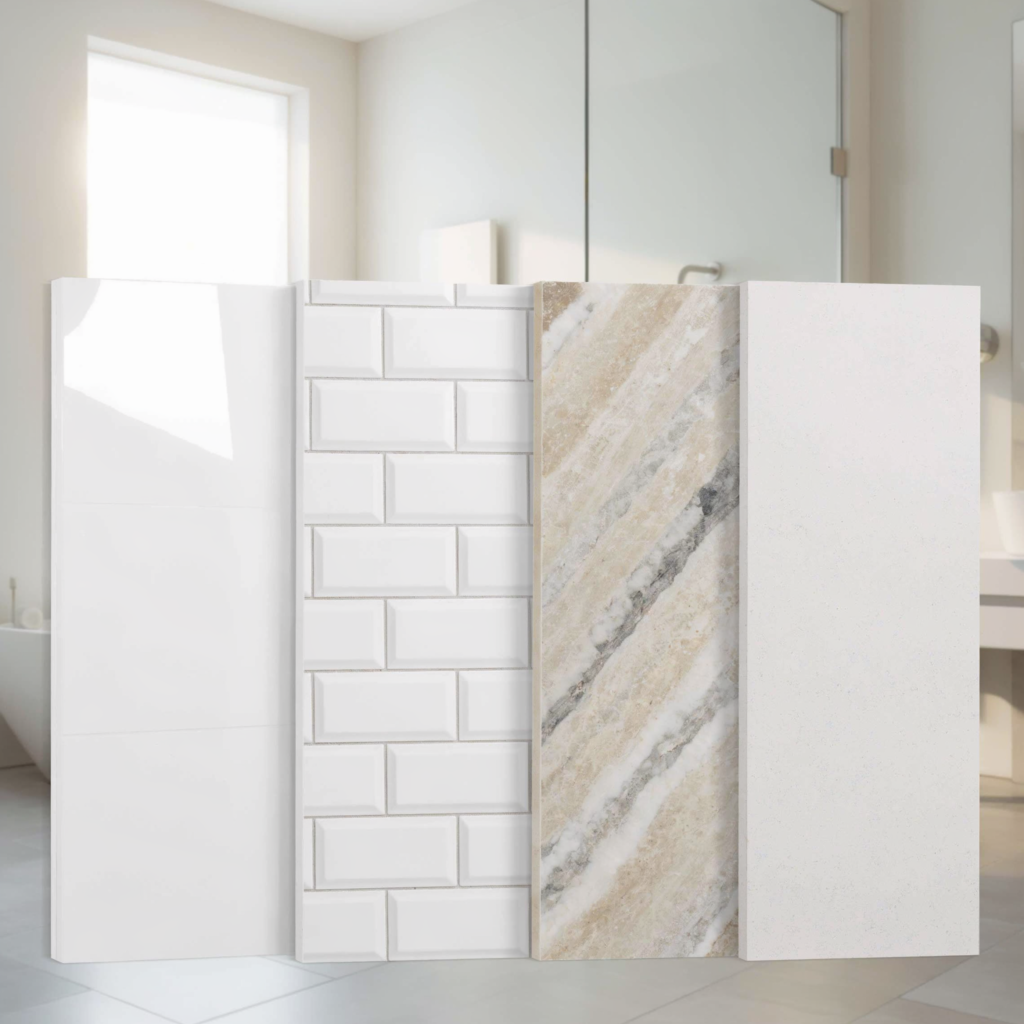
Manufacturers now produce acrylic panels with high-definition surface textures that closely mimic marble, travertine, subway tile, and other popular finishes. The visual quality has improved to the point where distinguishing acrylic from natural stone in a finished bathroom requires a close look. Options exist across a wide range of colors and patterns, from clean white gloss to warm stone aesthetics that complement wood vanities and matte black fixtures.
According to the 2024 Cost vs. Value Report from Remodeling Magazine, bathroom updates that balance visual appeal with functional improvement consistently deliver strong returns at resale. Acrylic panels check both boxes — they photograph well, appeal to buyers who don’t want to deal with grout maintenance, and hold up to real daily use in ways that matter when a home changes hands.
Homeowners converting an old bathtub alcove into a walk-in shower have a natural opportunity to use acrylic wall panels. The standard alcove dimensions — typically 60 inches wide — line up well with common panel sizes, minimizing cuts and reducing installation complexity. Many tub-to-shower conversions in this format wrap up in a single day using acrylic, which makes them one of the most efficient bathroom upgrades a homeowner can do.
The result is a clean, cohesive shower enclosure that looks intentional rather than patched together. Because the panels span full wall height without grout breaks, the visual effect is actually more modern and streamlined than a tile installation in many cases. For anyone remodeling an older bathroom and wanting a fresh, updated look without spending a fortune, this combination of materials and project type is hard to beat.
No material is perfect, and acrylic panels have real limitations worth knowing before you commit. Acrylic is more susceptible to scratching than ceramic tile, which means abrasive scrubbers or harsh chemical cleaners will dull the surface over time. Always use soft cloths and gentle cleaners.
Panels also require correct installation to perform as advertised. If adhesive is applied improperly or seams aren’t sealed correctly at corners and transitions, moisture can work its way behind the panels — causing the exact problems you were trying to avoid. This is why professional installation matters, even for a product designed to be straightforward.
Finally, acrylic doesn’t handle heat well compared to ceramic or stone. Avoid placing heat lamps directly above acrylic surfaces, and don’t use extremely hot water aimed directly at the panels for extended periods. Normal shower use is entirely fine, but extreme heat sources are a risk to the surface over time.
On This Page Introduction Conclusion Related Services Frequently Asked Questions What shower is best for aging in place near Grayslake IL? For many homeowners aging
On This Page Introduction Conclusion Related Services Frequently Asked Questions Ready to Transform Your Bathroom? Schedule Your Free In-Home Estimate Today Free In-Home Estimate
On This Page Introduction Conclusion Related Services Frequently Asked Questions Ready to Transform Your Bathroom? Schedule Your Free In-Home Estimate Today Free In-Home Estimate