What Are Acrylic and Fiberglass Showers Actually Made Of?
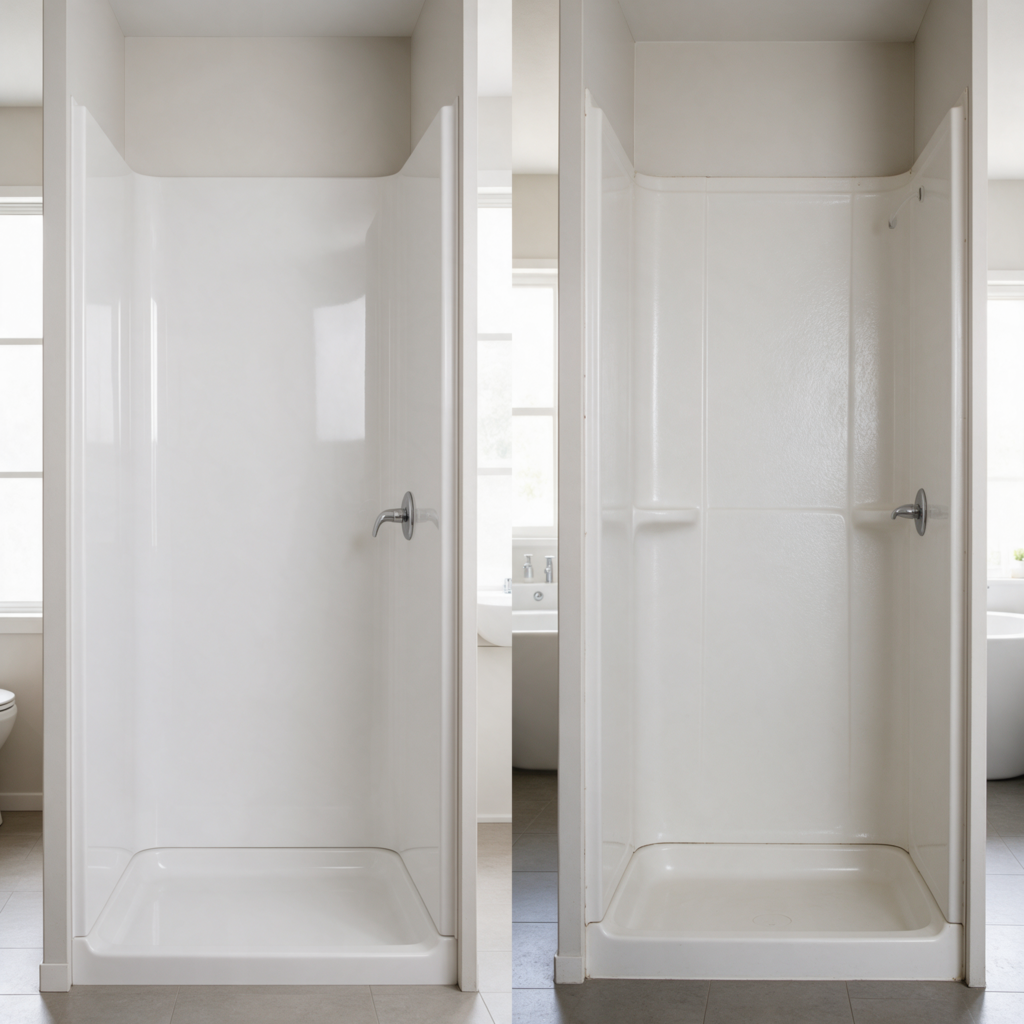
Before comparing the two, it helps to understand what you’re actually looking at. Fiberglass showers are made from fine glass fibers woven into a mat and bonded together with a resin. The result is a lightweight panel or enclosure that can be molded into almost any shape. The surface is typically finished with a thin gel coat that gives it a smooth, glossy appearance right out of the factory.
Acrylic showers start with a sheet of acrylic plastic that gets heated and vacuum-formed over a mold. The shaped sheet is then reinforced on the back with fiberglass for structural strength. That’s where a lot of the confusion comes from — most acrylic shower units contain fiberglass as a backing material, but they are not fiberglass showers. What you’re showering against is the acrylic surface, which behaves very differently than the gel coat on a fiberglass unit.
This distinction matters because the surface is what you see, touch, clean, and maintain every single day. Acrylic surfaces are non-porous and retain their finish better over time. Fiberglass gel coats are thinner, more porous by comparison, and more vulnerable to wear, staining, and cracking under regular use.
Cost Comparison: Which Material Costs More?
Fiberglass generally wins on upfront price. A basic fiberglass shower unit can cost as little as $300 to $500 for the materials alone. Acrylic units typically start a bit higher, often in the $400 to $900 range for a standard prefab enclosure, with premium options running higher depending on size and features.
When you factor in installation, the gap closes considerably. Bob Vila reports that shower installation costs typically range from $1,000 to $8,000 depending on scope, with simple prefab installations on the lower end and custom tile or walk-in shower builds at the top. For a straightforward tub-to-shower conversion using a prefab unit, most Lake County homeowners are looking at a total project cost in the $1,500 to $3,500 range.
Here’s the part that the sticker price doesn’t tell you: fiberglass tends to require more maintenance and earlier replacement, which drives up the real cost of ownership. A fiberglass shower that needs refinishing in five years or replacement in ten may end up costing more than an acrylic unit that lasts 20 to 30 years with minimal upkeep. Factor in the full picture before letting the initial price tag make your decision.
Durability: Which One Holds Up Better Over Time?
Acrylic is the more durable material. Full stop. The acrylic surface resists cracking, chipping, and fading better than the gel coat on a fiberglass unit. It handles the repeated stress of daily use — temperature changes, cleaning products, heavy showerheads — without showing wear as quickly.
Fiberglass, on the other hand, is a thinner and more brittle material. The gel coat surface scratches more easily, and once that protective coating is compromised, the underlying fiberglass becomes exposed to water. That leads to moisture absorption, which can cause warping, soft spots, and eventually structural failure. Homeowners who’ve scrubbed a fiberglass shower with the wrong cleaner know exactly what that damage looks like.
For homeowners in older homes — which are common throughout Grayslake, Round Lake, Wauconda, and surrounding communities — durability matters even more. Older homes often have slight settling and shifting in the subfloor and walls. Acrylic flexes slightly with that movement rather than cracking the way fiberglass does under stress. That flexibility is a real-world advantage, not just a spec sheet talking point.
Maintenance: What Does Each Material Require Week to Week?
Low maintenance is one of the biggest reasons homeowners in Lake and McHenry County choose prefabricated shower units over tile in the first place. Both acrylic and fiberglass beat tile on daily cleaning effort — no grout lines to scrub, no sealing required. But the two materials are not equal when it comes to ongoing care.
Acrylic surfaces clean easily with non-abrasive cleaners and a soft cloth or sponge. The non-porous surface resists soap scum buildup and doesn’t absorb mineral deposits the way fiberglass does. Most homeowners can keep an acrylic shower looking new with a quick wipe-down a few times a week.
Fiberglass requires more careful handling. Abrasive cleaners scratch the gel coat, leaving a dull, pitted surface that collects grime faster and becomes harder to clean over time. Harsh chemicals can cause the gel coat to yellow or crack. If you have hard water — which is common in Lake County given the regional water chemistry — mineral deposits on a fiberglass surface are particularly stubborn. You’ll spend more time cleaning a fiberglass shower and get less satisfying results.
Appearance and Finish Options
Both materials can be manufactured to mimic the look of tile, stone, or solid surface materials. High-quality acrylic units, in particular, have improved dramatically in appearance over the past decade. Modern acrylic showers come in a wide range of colors, textures, and panel configurations that look genuinely attractive in a remodeled bathroom.
Fiberglass units also come in various styles, but the gel coat finish tends to look more dated more quickly. That distinctive slight sheen and the particular way fiberglass yellows with age is something many homeowners recognize as a sign of an older bathroom. Acrylic retains its color and finish longer, which means the shower continues to look fresh years into its life.
If appearance is a high priority — particularly for homeowners who are remodeling to increase resale value — acrylic is the stronger choice. You can also explore how these prefab materials compare to other wall options in our guide to the best materials for shower walls, which covers everything from solid surface panels to natural stone.
Lifespan: How Long Does Each Material Last?
A well-maintained acrylic shower typically lasts 20 to 30 years. Some last longer with proper care. Fiberglass showers have a shorter expected lifespan — generally 10 to 15 years under normal residential use. The difference comes down to material density, surface hardness, and how each responds to years of heat, moisture, and cleaning.
That lifespan gap is significant for homeowners who plan to stay in their homes long-term. If you install a fiberglass shower today and you’re planning to be in that house for another 20 years, you’re probably looking at a second replacement before you’re done. With acrylic, one installation can take you through the life of the home without requiring a repeat project.
According to Angi’s shower remodel cost data, a full shower remodel averages $2,000 to $9,000 depending on scope and materials. Doing that twice costs more than doing it right the first time with a more durable material. The math makes a compelling case for acrylic when you’re thinking long-term.
Repairability: What Happens When Something Gets Damaged?
Neither material is immune to damage. Dropped shampoo bottles, accidentally dropped tools during a repair, or years of hard water deposits can all leave marks. The question is how easy each material is to fix when something goes wrong.
Acrylic can be repaired with acrylic repair kits available at hardware stores. Scratches can be buffed out. Minor cracks can be filled and refinished. A skilled bathroom contractor can restore an acrylic surface to near-original appearance in many cases. The repairs hold well because the material is consistent throughout — you’re not patching a surface coating.
Fiberglass repairs are more complex. Gel coat patching rarely matches the original finish perfectly, and it tends to be visible even after repair. Larger cracks in fiberglass can compromise the structural integrity of the unit, especially if moisture has already penetrated behind the gel coat. In many cases, repairing a seriously damaged fiberglass shower costs nearly as much as replacing it — which is why many homeowners end up replacing fiberglass showers earlier than expected. If you’re already seeing cracks, discoloration, or soft spots, our guide on signs it’s time to replace your shower is worth a read before you spend money on repairs that won’t hold.
Which Material Is Better for Different Homeowner Scenarios?
The right answer genuinely depends on your situation. Here’s a straightforward breakdown.
- Tight budget, short timeline: Fiberglass is a reasonable choice if you need the lowest possible upfront cost and don’t plan to stay in the home long-term. It gets the job done for a few years without breaking the bank.
- Long-term homeowner who wants low maintenance: Acrylic is the clear winner. The higher initial investment pays off in durability, easier cleaning, and a longer lifespan that means you won’t be calling a contractor again in ten years.
- Preparing a home for sale: Acrylic looks better and signals quality to buyers. A dated or yellowed fiberglass shower can actually work against your asking price.
- Household with kids or heavy daily use: Acrylic handles the wear and tear of a busy family bathroom far better than fiberglass. Fewer scratches, better stain resistance, and a surface that stays looking clean longer.
- Accessibility-focused remodel: If you’re converting a tub to a walk-in shower for a family member with mobility needs, an acrylic walk-in shower installation is the smarter long-term investment. The material will hold up to daily use for decades without requiring another disruptive remodel.
How Acrylic and Fiberglass Compare to Tile
Tile showers are often considered the gold standard for appearance and customization. And there’s no arguing with that on the aesthetic side — a well-done tile shower looks beautiful. But tile comes with real trade-offs: grout maintenance, higher installation costs, and longer project timelines.
Both acrylic and fiberglass beat tile handily on installation speed and ongoing maintenance. A prefab acrylic or fiberglass shower can typically be installed in one to two days. A custom tile shower takes significantly longer. For homeowners who want a clean, low-maintenance result without tearing apart their bathroom for a week, prefab acrylic is often the sweet spot between quality and convenience. Our full comparison of acrylic showers vs tile showers goes deeper on this if you’re still weighing those two options.
What to Look for When Choosing a Prefab Shower Unit
Regardless of which material you choose, the quality of the specific unit matters as much as the material category. Not all acrylic showers are created equal, and not all fiberglass units are bottom-tier. Here’s what to evaluate when comparing options.
Thickness matters more than most people realize. Thicker acrylic panels — typically 3mm or more — resist flexing and cracking far better than thin-gauge units. Look for units with reinforced bases and solid wall panels. Flimsy panels that flex when you press on them are a sign of a lower-quality product regardless of material.
Warranty coverage is another telling indicator. Quality acrylic shower units typically come with warranties of 10 years or more. Fiberglass warranties tend to be shorter. A manufacturer willing to back their product for a decade is telling you something about how long they expect it to last.