



What Is the Best Shower for Seniors? Safe, Accessible Options for Aging in Place
On This Page Introduction Conclusion Related Services Frequently Asked Questions What shower is best for aging in place near Grayslake IL? For many homeowners aging
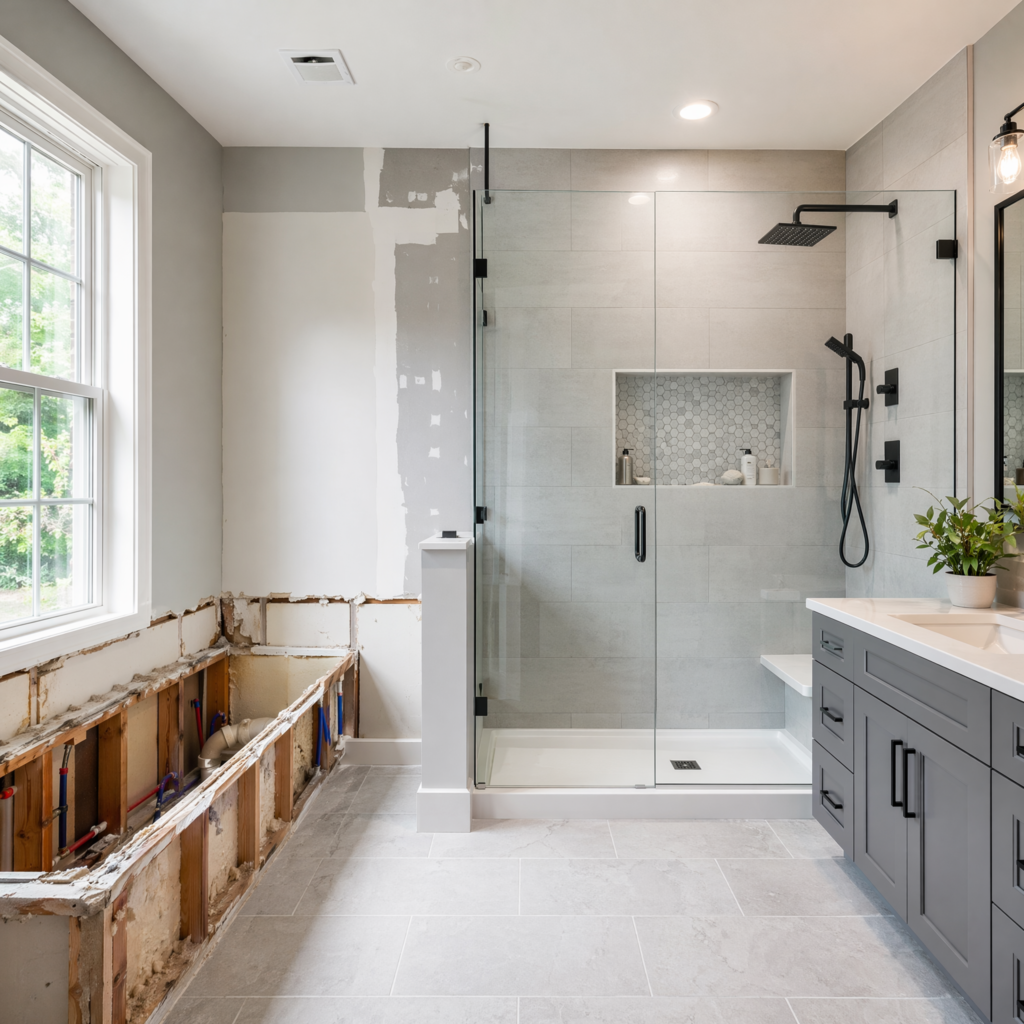
For most Illinois homeowners, a tub-to-shower conversion falls somewhere between $2,000 and $10,000, with the middle of the range — around $4,000 to $6,000 — covering the majority of standard residential projects. That wide spread exists because no two bathrooms are identical, and the decisions you make about materials, fixtures, and finishes drive cost as much as the labor does.
On the lower end, you’re looking at acrylic or fiberglass insert systems that drop into the existing tub space with minimal structural work. On the higher end, you’re getting custom tile, a linear drain, frameless glass, and potentially a redesigned layout. Both are legitimate options. The right one depends on your goals, your timeline, and how long you plan to stay in the home.
In the Lake County and McHenry County area specifically, labor rates track closely with the broader Chicagoland market. Skilled tile setters and plumbers in this region typically charge more than contractors in Rockford or Peoria, so expect your Illinois number to sit toward the higher end of national averages.
The single biggest cost factor is whether you’re doing a like-for-like swap or reconfiguring the space. If the drain stays in the same spot and the footprint doesn’t change, you save money. The moment you relocate plumbing — even a few inches — you’re adding hours of labor and potentially opening up the subfloor.
Material selection is the next major variable. Acrylic surrounds are faster to install and easier to maintain. Ceramic and porcelain tile take longer to set and grout, but they hold up better over decades and offer far more design flexibility. Natural stone looks stunning but costs more per square foot and requires sealing. Each step up the material ladder adds to both material cost and install time.
Glass enclosures are another place where budgets stretch. A basic framed shower door sits around $300 to $600 installed. A frameless glass panel or hinged frameless door can run $900 to $2,500 or more depending on glass thickness and hardware. Many homeowners skip glass entirely in smaller bathrooms and go with a curved rod and liner — a perfectly functional, budget-friendly choice.
Budget tier ($2,000–$3,500): This range covers a prefab acrylic or fiberglass shower insert, basic fixtures, and straightforward installation with no plumbing relocation. It’s a practical choice for a guest bath or a second bathroom where you want the conversion done cleanly without a big investment.
Mid-range tier ($4,000–$7,000): At this level, you’re looking at higher-quality acrylic systems or entry-level tile work, upgraded fixtures, a niche or two built into the wall, and a proper glass door or panel. Most primary bathroom conversions in Lake County land in this range. It’s where you get real quality without going custom.
Premium tier ($7,000–$12,000+): Custom tile throughout, a linear drain, frameless glass, a built-in bench, multiple shower heads, and designer fixtures. This is the full renovation — appropriate when you’re updating the entire bathroom aesthetic or preparing to sell a higher-end home.
Illinois doesn’t have a single statewide rule on bathroom remodeling permits — it’s handled at the municipality level. In most Lake County and McHenry County communities, a tub-to-shower conversion that involves plumbing changes requires a permit. Conversions that keep the drain in the same location and don’t touch the water supply lines often fall below the permit threshold, but this varies by town.
Skipping a required permit isn’t a smart risk. It creates problems when you sell the home and the work shows up as unpermitted during inspection. A legitimate contractor handles the permit process as a standard part of the job — if someone tells you permits aren’t necessary without actually checking with your municipality, that’s a red flag.
Labor typically accounts for 40 to 60 percent of a tub-to-shower conversion budget. In the Chicago suburbs, licensed plumbers charge between $90 and $150 per hour. Tile setters run $60 to $120 per hour depending on experience and the complexity of the pattern. A full conversion — demo, plumbing adjustment, waterproofing, tile or surround installation, glass, and trim — takes anywhere from one to four days depending on scope.
One thing that often surprises homeowners: waterproofing isn’t glamorous, but it’s where corners get cut most often. A proper installation uses a waterproof membrane behind the tile, not just cement board. According to Tile Letter, inadequate waterproofing behind shower tile is one of the leading causes of structural water damage in residential bathrooms. It’s not a place to economize.
Old homes — and there are plenty of them in Grayslake, Wauconda, and the surrounding communities — sometimes hide unpleasant surprises behind the tub surround. Rotted subfloor from years of slow leaks, galvanized pipes that need replacing, mold behind the wall board. These aren’t the contractor’s fault, and a good company will show you exactly what they found before proceeding.
Budget a contingency of 10 to 15 percent on top of your quoted price. Not every project needs it, but if yours does and you haven’t planned for it, you’re in a stressful spot. Most experienced remodelers will tell you the same thing — it’s not pessimism, it’s just how older homes work.
A conversion and a full remodel are not the same thing, and the distinction matters for your budget. A conversion replaces the tub and surround — it’s a focused project. A full remodel touches flooring, vanity, toilet, lighting, and sometimes the layout. The two projects can overlap if you want them to, but they don’t have to.
If your vanity and toilet are in good shape, a standalone conversion makes the most sense. You get the upgrade you actually want without spending on things that don’t need attention. If everything in the bathroom is dated and worn, tackling it all at once usually delivers better value per dollar spent than doing it in two separate projects.
The honest answer: it depends on the home and the neighborhood. In most markets, having at least one bathtub in the home is considered important for resale — particularly for buyers with young children. If you’re converting the only tub in a three-bedroom house, some buyers will see that as a drawback.
On the other hand, a well-executed walk-in shower in a primary bathroom is a genuine selling point, especially for buyers over 50 who prefer not to step over a tub ledge. The National Association of Realtors’ Remodeling Impact Report consistently shows that bathroom remodels recover a strong portion of their cost at resale. A conversion done with quality materials and professional installation reads as an upgrade, not a downgrade.
Get at least three written quotes before committing. Each one should specify what’s included: demo and disposal, waterproofing method, materials, fixture allowances, and what happens if they find damage behind the wall. A vague quote is a setup for disputes later.
Ask directly whether the company uses its own crew or subcontracts the work. Subcontracted labor isn’t inherently bad, but it adds a layer of accountability that can complicate things if problems arise. A contractor who installs the work themselves has more skin in the game.
Also ask about timeline. A quality conversion should take one to three days for standard projects. If someone quotes you six weeks for a straightforward swap, they’re overbooked. If they promise a custom tile job in one day, they’re cutting corners.
On This Page Introduction Conclusion Related Services Frequently Asked Questions What shower is best for aging in place near Grayslake IL? For many homeowners aging
On This Page Introduction Conclusion Related Services Frequently Asked Questions Ready to Transform Your Bathroom? Schedule Your Free In-Home Estimate Today Free In-Home Estimate
On This Page Introduction Conclusion Related Services Frequently Asked Questions Ready to Transform Your Bathroom? Schedule Your Free In-Home Estimate Today Free In-Home Estimate