



What Is the Best Shower for Seniors? Safe, Accessible Options for Aging in Place
On This Page Introduction Conclusion Related Services Frequently Asked Questions What shower is best for aging in place near Grayslake IL? For many homeowners aging
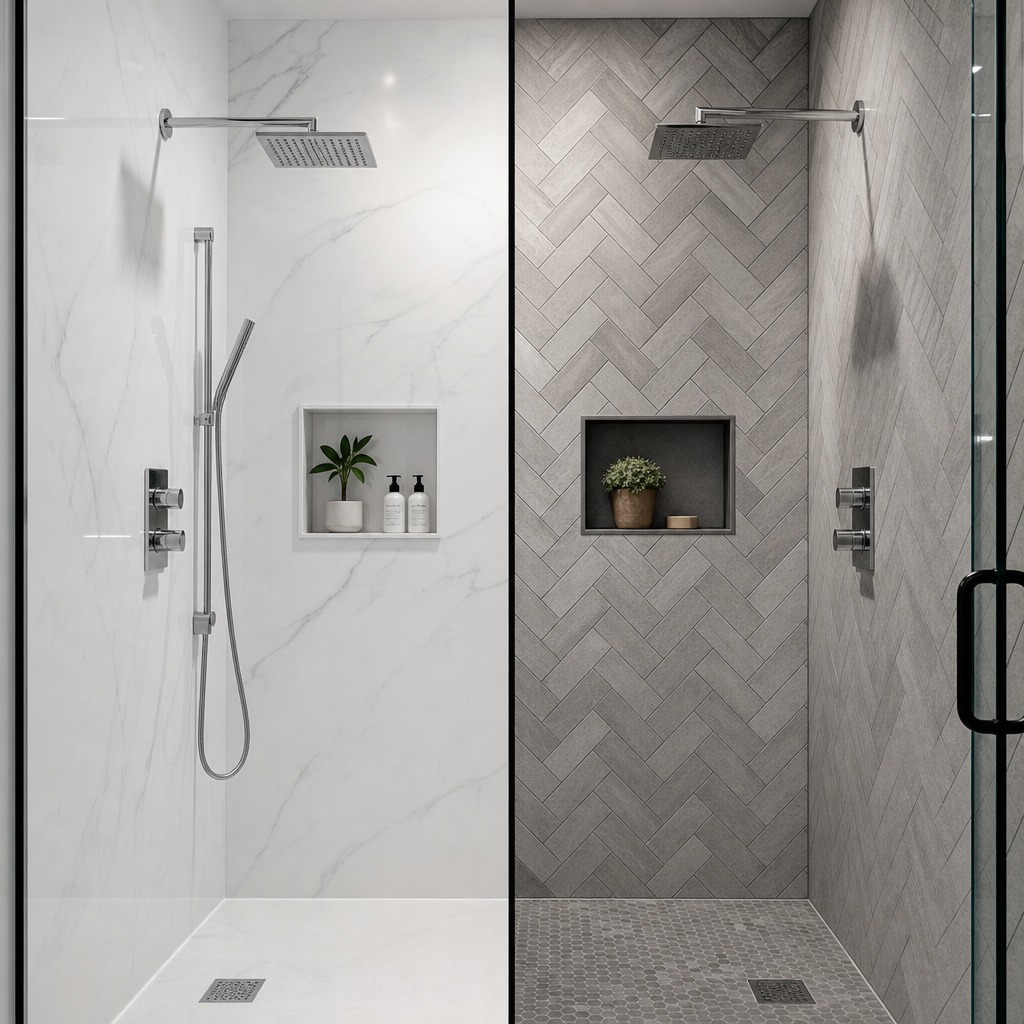
Embarking on a bathroom remodel is one of the most exciting yet stressful investments a homeowner can make, and it almost always culminates in a single, high-stakes decision: choosing between an acrylic shower system and a traditional custom tile installation. At first glance, this choice seems entirely aesthetic, pitting the sleek, uniform efficiency of modern synthetic materials against the timeless, textured luxury of classic masonry. However, focusing purely on the upfront look is a mistake that can haunt a property owner for years. The true reality of a shower renovation lies beneath the surface, hidden within the ten-year cumulative maintenance costs, structural waterproofing risks, and the long-term impact on your home’s resale equity.
While custom tile offers an unmatched aesthetic luxury that yields a strong average return on investment of roughly 70%, modern premium acrylic provides a seamless, completely leak-proof barrier that saves up to 60% on upfront installation labor while eliminating hours of lifetime scrubbing. Ultimately, neither material is a universal winner. The ideal option for your project depends entirely on your home’s equity tier, your available liquid budget, and your long-term renovation timeline.
To make an educated decision, it is essential to look past marketing buzzwords and understand the actual science of these materials. Modern acrylic shower systems are a far cry from the flimsy, yellowing plastic inserts found in the builder-grade homes of the 1990s. Today’s premium acrylic consists of high-density, vacuum-formed sheets that are heavily reinforced with a durable backing of fiberglass and specialized resins. These panels are non-porous and manufactured under extreme heat and pressure, resulting in a single, continuous sheet that can be molded to feature solid contemporary colors, high-fidelity faux-marble veining, or even deeply embossed, simulated tile grout patterns that mimic masonry without the physical vulnerabilities.
A tile shower system, by contrast, is not a single product but rather a complex, multi-layered structural matrix. When you look at a tile shower, you are seeing the outermost layer of ceramic, porcelain, or natural stone, but its performance depends entirely on what lies beneath. A proper installation requires a perfectly rigid substrate, such as cement backer board or specialized waterproof foam boards, which are fastened to the wall studs. The tiles are then individually adhered to this surface using a specialized thin-set mortar. Once cured, the gaps between the tiles are filled with a cementitious or epoxy grout matrix.
The critical difference between these two systems comes down to the scientific concept of porosity. While high-quality porcelain or ceramic tiles are themselves virtually impervious to liquid, traditional cement-based grout is highly porous. It contains millions of microscopic air pockets that naturally pull in moisture, body oils, and soap residue through capillary action, turning a tile shower wall into a dynamic environment that requires constant environmental defense, whereas acrylic remains a chemically inert, completely impenetrable shield.
If easier upkeep is your priority, explore our low-maintenance shower installation in Lake County to compare the acrylic and Onyx systems we install.
When analyzing the financial commitment of a shower remodel, looking only at the initial invoice can be incredibly misleading. An acrylic shower project is highly predictable from a budgetary standpoint. Because the panels are prefabricated or modularly adjusted to fit standard alcove sizes, material costs generally hover between $800 and $3,500, depending on whether you choose a basic solid wall or a premium simulated stone system. Because the installation process requires minimal specialized construction tools and zero curing time between steps, labor and substrate preparation generally add a predictable $1,000 to $2,500 to the bill. This brings the total average installed cost of an acrylic shower to a manageable range of $2,500 to $6,000.
Custom tiled showers exist in an entirely different financial stratosphere because they are built from scratch on-site. While basic ceramic tiles can be purchased for as little as $2 per square foot, luxury porcelain, intricate mosaics, and natural stones like marble or travertine frequently range from $15 to $50 or more per square foot. The true budget driver, however, is the intensive labor involved. Building a custom tile shower requires a master artisan to manually slope a mortar bed for the drain, apply specialized liquid or sheet waterproofing membranes, layout complex geometric patterns, individually cut and set hundreds of tiles, and meticulously apply grout and silicone. This highly specialized process pushes labor and preparation costs to anywhere from $4,000 to over $10,000. Consequently, a custom tiled shower regularly demands a total investment of $9,000 to $20,000, with high-end master suites easily scaling higher.
The financial comparison changes dramatically when you look at a fifteen-year timeline. Historical industry data reveals that an average mid-range tile shower often requires between $1,500 and $3,000 in professional maintenance over fifteen years to cover recurring costs like professional deep cleanings, chemical grout resealing, recaulking, or minor structural repairs. Acrylic showers cost virtually nothing to maintain during their operational life because they never require sealing or regrouting. However, acrylic possesses a definitive absolute lifespan of fifteen to twenty years, at which point the material may begin to exhibit minor surface dulling or micro-scratches that necessitate a complete replacement. A flawlessly constructed tile shower, though expensive to maintain, can easily surpass the fifty-year mark, structurally outlasting the house itself.
Still not sure how long your specific installation will take? Our team will walk you through the whole timeline before a single tile is touched.
The primary engineering challenge of any bathroom is containing water, and this is where the structural differences between acrylic and tile become most glaring. The inherent weakness of any tile shower is its rigidity combined with the natural behavior of residential foundations. Over time, every house settles, shifts, and expands or contracts with seasonal temperature fluctuations. Because tile and traditional cement grout are completely rigid, these microscopic structural movements inevitably create hairline fractures within the grout lines or along the corner joints. If the installer did not utilize an advanced, fully bonded waterproofing membrane system behind the tile, these tiny cracks quickly transform into catastrophic conduits for water. This moisture slowly migrates into the underlying framing, rotting wood studs and degrading drywall long before any damage becomes visible on the surface.
Acrylic panels possess a distinct engineering advantage in this arena due to their natural material elasticity. High-density acrylic can flex slightly without cracking or losing structural integrity, allowing it to seamlessly accommodate the natural settling of a home. Because an acrylic surround features minimal seams—often only where the large wall panels meet in the corners—there are no vulnerable lines of defense for water to breach. The panels are bonded directly to the wall studs or greenboard using heavy-duty, elastomeric structural adhesives that maintain a waterproof seal even under physical duress.
This structural difference extends directly to household hygiene and daily health. Because acrylic is entirely non-porous and treated with antimicrobial surface finishes, it acts as an absolute barrier against biological growth. Mold spores, mildew, and bacteria simply cannot find a physical anchor on a smooth acrylic surface, allowing them to be wiped away effortlessly. Conversely, the microscopic texture of tile grout lines acts as an ideal trap for sloughed-off skin cells, organic soap scum, and hard water minerals. This organic buildup, combined with the damp, porous nature of cement grout, creates an optimal breeding ground for black mold and pink mildew colonies, requiring routine, aggressive chemical scrubbing to keep the environment sanitary.
Beyond the financial and structural differences, you must consider the real-world disruption that a renovation introduces to your daily life. The installation timeline for an acrylic shower is famously brief, making it the preferred choice for households with limited bathrooms. A professional crew can typically remove an old, failing tub or shower, inspect the exposed framing for existing rot, update the plumbing valves, and completely anchor, seal, and trim a new acrylic system within twenty-four to forty-eight hours. This rapid turnaround minimizes household disruption, allowing homeowners to restore their daily routines almost immediately.
In stark contrast, a custom tile shower is a multi-step construction project that cannot be rushed without compromising its long-term integrity. A proper tile installation requires anywhere from three to seven full business days, dictated entirely by mandatory material drying and curing windows. The first day is dedicated entirely to framing adjustments, plumbing rough-ins, and substrate installation. The second day focuses on applying liquid or sheet waterproofing membranes, which must cure completely before undergoing a mandatory twenty-four-hour flood test to ensure there are no hidden leaks. The third and fourth days are consumed by the meticulous layout, cutting, and setting of the tiles. The fifth day introduces the grouting process, which requires its own curing window before the final days can be spent applying silicone caulk, installing trim kits, and performing a detailed cleanup. If a household relies on that specific shower for daily use, this extended timeline introduces a significant logistical challenge.
While acrylic wins on speed and practicality, custom tile remains the undisputed champion of aesthetic freedom and architectural luxury. When you choose tile, your design options are virtually infinite. You can seamlessly mix and match different textures, ranging from matte porcelain and glossy ceramics to the organic, earth-toned variations of natural slate or Carrara marble. Homeowners can express their personal style through intricate herringbone patterns, custom accent bands, built-in shampoo niches tailored to specific bottle sizes, or integrated floating stone benches. Furthermore, tile allows for complete geometric freedom, enabling installers to accommodate odd angles, sloped ceilings, or expansive walk-in wet rooms that prefabricated acrylic panels simply cannot accommodate.
This aesthetic superiority translates directly into market value and home buyer psychology. In upscale property markets—specifically homes valued in the top twenty percent of their regional baseline—an acrylic shower insert can actually hurt a property’s marketability. Affluent buyers instantly recognize prefabricated acrylic as a cost-cutting measure, often viewing it as a project they will need to tear out and replace. In these luxury environments, a custom, professionally tiled shower is considered a baseline expectation that justifies a premium listing price and accelerates the sale.
However, for mid-range, starter, or multi-family rental properties, a pristine, modern acrylic system preserves value perfectly. Buyers in this segment prioritize low maintenance and immediate move-in readiness over architectural statements. Installing a $15,000 tile shower in a neighborhood where homes sell for the median average represents an over-improvement that rarely yields a matching financial return, making acrylic the far more logical and protective investment for your equity.
Choosing the ideal shower material is not about finding a universally superior product; it is about matching the material to your specific structural, financial, and lifestyle realities. To make the correct choice, you must weigh your immediate constraints against your long-term goals for the property.
An acrylic shower system is the clear logical choice if you are updating a secondary family bathroom, remodeling a rental property, or managing a tight renovation budget. It is ideal for those who want to completely eliminate the chore of scrubbing grout lines, avoid prolonged construction disruptions, and establish a highly durable, 100% leak-proof system on a swift timeline.
Conversely, a custom tile shower remains the definitive choice if you are remodeling a primary master suite where you intend to live for the next ten to twenty years. It is the right path if you desire a bespoke, spa-like sanctuary that maximizes your home’s long-term resale value, and if you possess the financial flexibility to invest in premium craftsmanship. By aligning your choice with your home’s market value and your personal lifestyle priorities, you ensure an investment that brings daily satisfaction and lasting peace of mind.
To ensure whichever system you choose maintains its factory appearance for decades, you must tailor your cleaning regimen to the specific chemistry of the material. Acrylic is a relatively soft synthetic compound that can easily sustain microscopic scratches if treated with abrasive scouring powders or stiff-bristled brushes. These tiny scratches permanently dull the surface gloss and create valleys where grime can collect. Acrylic must be cleaned exclusively with soft sponges and mild, non-abrasive liquid dish soaps or specialized spray cleaners. Tile systems require the exact opposite approach; while the porcelain tiles can withstand aggressive scrubbing, you must avoid harsh, acidic cleaners like pure vinegar or industrial bleach on standard cement grout. These chemicals slowly erode the cement binder over time, causing the grout to crumble and wash away. Protecting tile requires a pH-neutral cleaner and a commitment to applying a premium penetrating sealer to the grout lines every twelve to twenty-four months.
While it may be tempting to skip the demolition phase, professionals strongly advise against installing acrylic panels directly over old tile. For the specialized structural adhesive to bond correctly over time, it requires a completely flat, bare surface like moisture-resistant drywall or fresh cement board. Sealing over existing tile can permanently trap hidden moisture or existing
mold behind your walls, which will quietly decay your home’s wooden framing.
Porcelain tile is universally recommended as the most durable and water-resistant choice for a custom shower masonry system. To ensure maximum safety underfoot, we always suggest looking for tile with a Dynamic Coefficient of Friction (DCOF) rating of 0.42 or higher, which indicates excellent slip resistance when wet. Additionally, utilizing smaller mosaic tiles increases the number of grout lines, naturally creating a textured, high-traction surface.
Fortunately, modern premium acrylic systems are engineered with advanced ultraviolet stabilizers and pure acrylic resins that completely prevent the yellowing seen in older plastics. When a modern shower discolors, it is almost always the result of micro-scratches caused by harsh chemical cleansers or abrasive scrubbing pads. These tiny scratches trap hard water minerals and soap scum over time, creating an artificially dulled appearance.
In high-end property markets, a professionally built custom tile shower acts as a luxury asset, recovering roughly 65% to 70% of its upfront installation cost upon home resale. Acrylic showers are an excellent, highly cost-effective choice for starter homes or rental properties because they prioritize effortless maintenance. However, in luxury neighborhoods, buyers expect high-end masonry, and an acrylic unit might be perceived as a budget compromise.
The most frequent unexpected expense in a tile installation stems from a failed twenty-four-hour water flood test due to improper initial waterproofing. If the underlying waterproof membrane or the drain connection is not sealed perfectly by the installer, water will slowly weep through. Correcting this error forces the team to completely demolish the fresh mortar bed and start over, adding substantial unplanned material and labor costs.
Whether you need a full tear-out or a focused upgrade, our team is here to help you create a bathroom you’ll love.
On This Page Introduction Conclusion Related Services Frequently Asked Questions What shower is best for aging in place near Grayslake IL? For many homeowners aging
On This Page Introduction Conclusion Related Services Frequently Asked Questions Ready to Transform Your Bathroom? Schedule Your Free In-Home Estimate Today Free In-Home Estimate
On This Page Introduction Conclusion Related Services Frequently Asked Questions Ready to Transform Your Bathroom? Schedule Your Free In-Home Estimate Today Free In-Home Estimate