



How Much Does a Walk-In Shower Cost in Illinois? (2026 Pricing Guide)
On This Page Introduction Conclusion Related Services Frequently Asked Questions Ready to Transform Your Bathroom? Schedule Your Free In-Home Estimate Today Free In-Home Estimate
For decades, bathtubs were considered a standard feature in most American homes. However, homeowner preferences have evolved significantly in recent years. Today, many homeowners are choosing to replace traditional bathtubs with modern walk-in showers that offer greater convenience, improved accessibility, and a more contemporary appearance.
This shift is not simply a design trend. It reflects changing lifestyles, aging-in-place considerations, and a growing desire for bathrooms that are both functional and easy to maintain. According to the Houzz U.S. Bathroom Trends Study, larger showers continue to be one of the most popular upgrades among homeowners undertaking bathroom renovations. In fact, many renovators are choosing to remove rarely used bathtubs altogether to create more spacious and practical shower environments.
Whether you’re planning a bathroom remodel, preparing your home for retirement, or simply looking for ways to improve your daily routine, understanding why homeowners replace bathtubs with walk-in showers can help you determine if this popular upgrade is the right choice for your home.
Walk-in showers have become one of the most requested bathroom remodeling features across the country. While bathtubs still serve a purpose in many homes, particularly those with young children, changing homeowner preferences have contributed to the rising popularity of shower-focused bathroom designs.
Modern homeowners increasingly prioritize convenience and efficiency. For many people, showers are used daily, while bathtubs may sit unused for months or even years. As a result, homeowners often view the space occupied by a bathtub as an opportunity to create something more functional.
The National Kitchen & Bath Association (NKBA) has identified larger showers, aging-in-place features, and accessible bathroom layouts as ongoing design trends. These preferences reflect broader demographic shifts, including an aging population and increased demand for homes that support long-term independence.
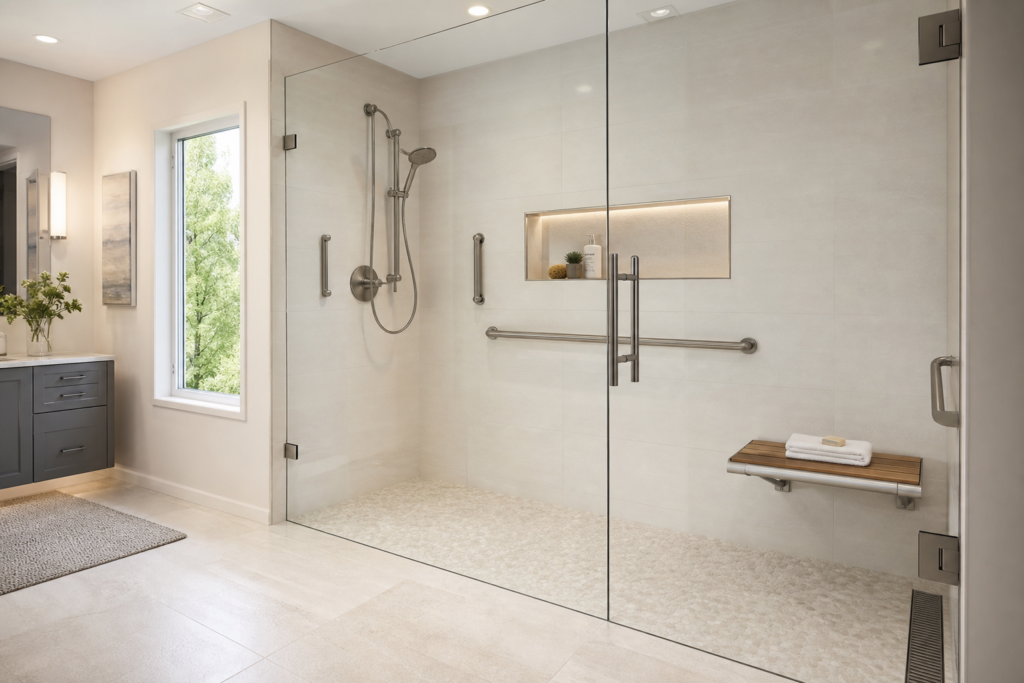
Additionally, walk-in showers are no longer viewed solely as practical upgrades. Today’s designs often incorporate luxury features such as rainfall showerheads, frameless glass enclosures, built-in seating, recessed storage niches, and designer tile finishes that transform bathrooms into spa-like retreats.
One of the most common reasons homeowners replace bathtubs with walk-in showers is accessibility.
Traditional bathtubs require users to step over a high threshold when entering and exiting. While this may not seem significant for younger individuals, it can become increasingly challenging as people age or experience mobility limitations.
According to the Centers for Disease Control and Prevention (CDC), falls are a leading cause of injury among older adults, and bathrooms are among the most common locations for household falls. Wet surfaces, slippery floors, and high tub walls can all increase the risk of accidents.
Walk-in showers help address these concerns by providing easier entry and exit. Many homeowners choose to incorporate additional safety features such as grab bars, slip-resistant flooring, handheld showerheads, and built-in benches. Curbless shower designs, which eliminate the need to step over a threshold entirely, have become especially popular in aging-in-place remodels.
Organizations such as AARP continue to encourage homeowners to consider accessibility improvements before they become necessary. Proactively upgrading a bathroom can improve safety, comfort, and independence for years to come.
A tub-to-shower conversion can be completed in as little as one to three days — giving you a more functional, modern bathroom without the long wait.
Even when the physical dimensions of a bathroom remain unchanged, replacing a bathtub with a walk-in shower can dramatically improve the perception of space.
Bathtubs often create visual barriers that make bathrooms feel smaller and more confined. In contrast, walk-in showers—particularly those with frameless glass enclosures—allow sightlines to extend throughout the room, creating a more open and spacious appearance.
This design advantage is especially valuable in smaller bathrooms where every square foot matters. Homeowners frequently report that their bathrooms feel significantly larger after completing a tub-to-shower conversion, even though the actual footprint has not changed.
Designers often pair walk-in showers with other space-enhancing features such as large-format tile, floating vanities, recessed storage niches, and light color palettes. Together, these elements help maximize both visual openness and functionality.
For homeowners looking to make the most of a compact bathroom, replacing a bathtub with a walk-in shower can be one of the most effective ways to improve the overall layout and usability of the space.
Bathroom maintenance is another major factor influencing homeowner decisions.
Traditional tubs and tile surrounds often require ongoing cleaning to prevent soap scum, mildew, mold, and grout discoloration. Over time, maintaining these surfaces can become both time-consuming and frustrating.
Walk-in showers—particularly those constructed with acrylic wall systems or large-format tile—can significantly reduce maintenance requirements. Acrylic wall panels eliminate grout lines entirely, while frameless glass enclosures minimize areas where dirt and moisture can accumulate.
According to the Environmental Protection Agency (EPA), mold can begin growing within 24 to 48 hours when moisture is present. Bathrooms naturally create humid conditions, making proper design and material selection important considerations for long-term maintenance.
Many homeowners appreciate that walk-in showers are generally easier to clean, require less scrubbing, and often stay looking newer for longer periods of time compared to older bathtub installations.
For busy households, the convenience of reduced maintenance can be a compelling reason to make the switch.
Today’s bathroom design trends increasingly focus on creating luxurious, spa-inspired environments. Walk-in showers have become a centerpiece of this movement.
Unlike traditional tub-shower combinations, walk-in showers offer greater flexibility when it comes to design. Homeowners can choose from countless combinations of tile, fixtures, lighting, glass enclosures, and storage solutions to create a highly personalized space.
Popular features include:
These design elements not only improve functionality but also create a more upscale appearance that many homeowners find appealing.
As bathroom remodeling trends continue to evolve, walk-in showers remain one of the most sought-after features for both contemporary and traditional homes.
While soaking tubs can provide relaxation, the reality is that most homeowners use their showers far more frequently than their bathtubs.
For many families, a bathtub occupies valuable space without being used regularly. Converting that space into a larger, more comfortable shower often improves the bathroom’s day-to-day functionality.
Walk-in showers can accommodate multiple showerheads, built-in seating, accessible storage, and customized layouts that better meet the needs of modern households. They also simplify daily routines by making showering more convenient and comfortable.
This practical advantage is one of the primary reasons many homeowners decide that a walk-in shower offers greater long-term value than a bathtub they rarely use.
Many homeowners wonder whether replacing a bathtub will affect their home’s resale value.
The answer depends on several factors, including the local real estate market, the number of bathrooms in the home, and the target buyer demographic.
In many cases, walk-in showers are viewed as highly desirable features, particularly in primary bathrooms. Modern buyers often appreciate updated bathrooms that emphasize convenience, accessibility, and contemporary design.
According to Remodeling Magazine’s Cost vs. Value Report, bathroom improvements continue to rank among the most valuable home renovation projects. While a tub-to-shower conversion alone may not guarantee a specific return on investment, it can significantly enhance buyer appeal when executed properly.
One important consideration is maintaining at least one bathtub somewhere in the home. Families with young children often prefer having access to a bathtub, so completely eliminating every tub may not be ideal in some markets.
Although walk-in showers offer numerous advantages, the decision ultimately depends on your lifestyle, needs, and long-term goals.
Homeowners who prioritize accessibility, convenience, low maintenance, and modern design often find that a tub-to-shower conversion significantly improves their quality of life. Those planning to age in place may particularly benefit from the enhanced safety and usability that walk-in showers provide.
On the other hand, households with young children or homeowners who regularly enjoy soaking baths may decide that keeping at least one bathtub is the better option.
The best approach is to evaluate how you currently use your bathroom and whether a walk-in shower would better support your daily routine.
Walk-in showers offer improved accessibility, easier maintenance, modern aesthetics, and greater functionality, making them appealing to a wide range of homeowners.
In many cases, yes. Walk-in showers eliminate the need to step over a high tub wall and can incorporate safety features such as grab bars and slip-resistant flooring.
Generally, yes. Many walk-in shower systems have fewer grout lines and are easier to clean than traditional tub-shower combinations.
Not necessarily. Many buyers prefer walk-in showers, especially in primary bathrooms. However, maintaining at least one bathtub in the home is often recommended.
Absolutely. Walk-in showers can help small bathrooms feel larger and more open while improving functionality and accessibility.
The growing popularity of walk-in showers reflects changing homeowner priorities. Accessibility, convenience, modern design, and easier maintenance have made tub-to-shower conversions one of the most popular bathroom remodeling projects today.
Whether you’re preparing your home for the future, updating an outdated bathroom, or simply looking for a more practical daily experience, replacing a bathtub with a walk-in shower can provide benefits that extend far beyond appearance alone.
By carefully considering your household’s needs and working with experienced remodeling professionals, you can create a bathroom that not only looks beautiful but also improves comfort, safety, and functionality for years to come.
Whether you need a full tear-out or a focused upgrade, our team is here to help you create a bathroom you’ll love.
On This Page Introduction Conclusion Related Services Frequently Asked Questions Ready to Transform Your Bathroom? Schedule Your Free In-Home Estimate Today Free In-Home Estimate

On This Page Introduction Conclusion Related Services Frequently Asked Questions Ready to Transform Your Bathroom? Schedule Your Free In-Home Estimate Today Free In-Home Estimate

On This Page Introduction Conclusion Related Services Frequently Asked Questions Ready to Transform Your Bathroom? Schedule Your Free In-Home Estimate Today Free In-Home Estimate