What a Tub-to-Shower Conversion Actually Involves
Before you can evaluate a quote, you need to understand what the work actually entails. A tub-to-shower conversion is not just swapping one fixture for another. The contractor removes the existing bathtub, which involves disconnecting plumbing, cutting out the surround, and carefully removing the tub without damaging the subfloor or surrounding walls. What’s underneath matters a lot — older homes in Grayslake, Round Lake, and Wauconda sometimes reveal water damage, rotted subfloor boards, or outdated drain configurations that add time and cost to the project.
Once the tub is out, the drain location typically needs to be repositioned or reconfigured to work with a shower pan or tile floor. New waterproofing is applied to the walls and floor before any finish materials go in. Then the shower walls, pan or tile base, door or enclosure, and new fixtures are installed. Done right, this is a multi-day project — not a Saturday afternoon job.
The Main Factors That Drive the Cost of a Tub-to-Shower Conversion
Labor is usually the largest single line item. In the Chicagoland suburbs, skilled bathroom remodeling labor runs between $75 and $150 per hour depending on the contractor and the complexity of the work. A straightforward conversion in a 5×8 bathroom might take two to three days. A more complex project — custom tile, significant plumbing relocation, or structural repairs — adds more time and cost on top of that baseline.
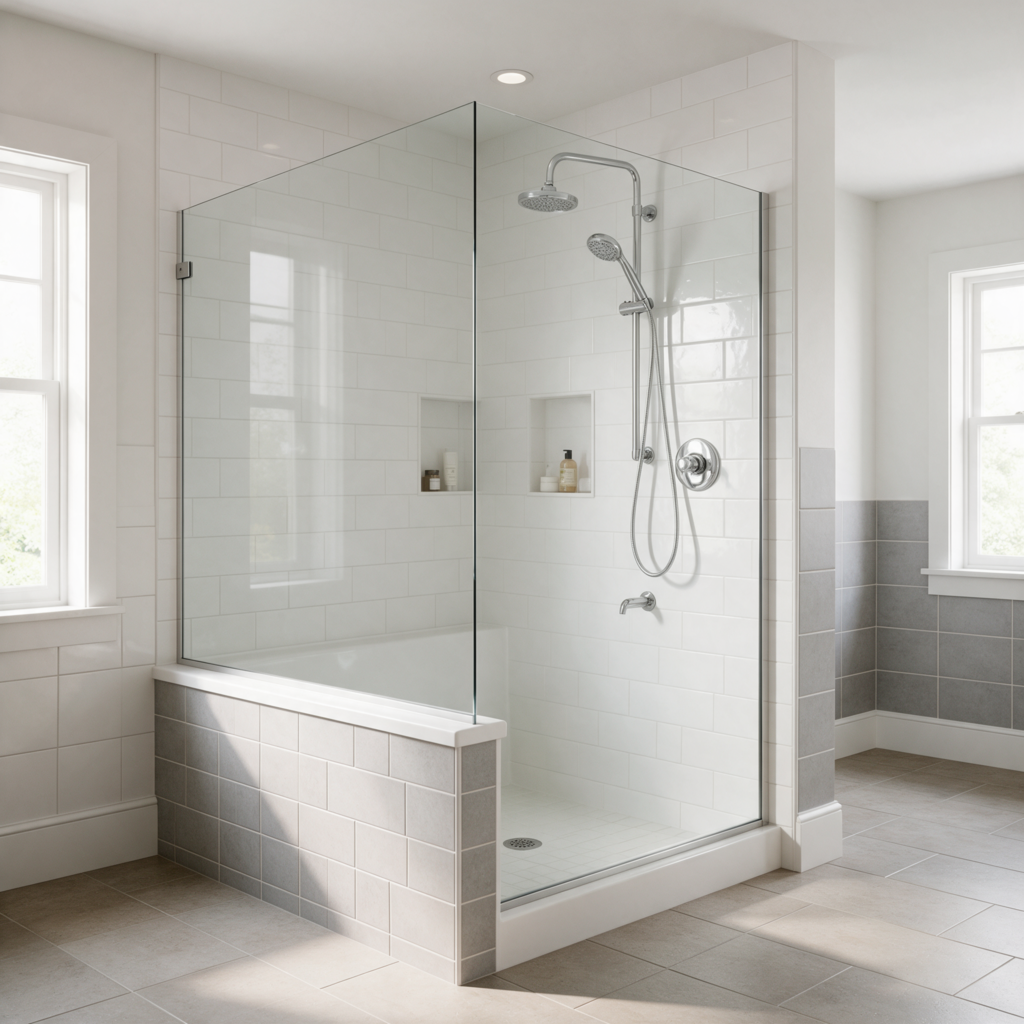
Material choices have an enormous impact on the final price. A prefabricated acrylic shower kit is far less expensive than custom tile work. That’s not a value judgment — both have their place depending on the homeowner’s goals and budget. A basic one-piece acrylic insert with a standard showerhead and door might bring material costs in around $800 to $1,500. A fully tiled shower with a niche, bench, frameless glass door, and rain head fixture can push material costs alone past $4,000 to $5,000.
Plumbing modifications are another variable. If the existing drain is in the right position and the supply lines are in good shape, plumbing costs stay manageable. If the drain needs to be moved, or if the valves and supply lines are corroded and need replacement, expect to add $500 to $1,500 or more to the total. This is especially common in homes built before 1990.
Breaking Down the Cost Ranges You’ll Actually See
Here’s a practical breakdown of what different project tiers typically look like in Lake County and McHenry County:
- Basic conversion ($3,000–$5,000): Acrylic or fiberglass shower insert, standard fixtures, no major plumbing moves, simple framed glass door or curtain rod. Best for straightforward bathrooms with no existing damage.
- Mid-range conversion ($5,000–$8,000): Tile walls and floor, recessed niche, semi-frameless or frameless door, upgraded showerhead or handheld combo, minor plumbing adjustments included.
- Premium conversion ($8,000–$12,000+): Full custom tile, bench, multiple body sprays or a rain head system, frameless glass enclosure, complete plumbing replacement, possible structural repairs or floor leveling.
These ranges reflect full project costs — materials and labor combined. Any quote that falls significantly below the low end of the appropriate tier deserves a close look at what’s being left out.
How Much Does a Tub-to-Shower Conversion Cost Compared to a Full Bathroom Remodel?
This is a question homeowners ask all the time, and the comparison is worth making. A full bathroom remodel in the Chicago suburbs — new vanity, toilet, flooring, lighting, and shower — typically runs $10,000 to $25,000 or more depending on scope and finishes. A tub-to-shower conversion is a focused project that delivers a major upgrade without touching everything else in the room.
If your vanity, toilet, and flooring are still in good shape, a conversion is often the smarter financial move. You get the shower you want without the disruption and expense of redoing the whole room. Some homeowners do choose to coordinate new flooring or a vanity update at the same time, since the contractor is already on-site — which can make logistical sense even if it adds to the total.
What Hidden Costs Actually Show Up on Real Projects
Permit fees are real and often overlooked. In most Lake County municipalities, a building permit for bathroom plumbing work is required and runs between $150 and $400. A reputable contractor pulls the permit — that’s not optional, and it protects you if you ever sell the home. Be skeptical of any contractor who suggests skipping it to save money.
Subfloor repair is the most common surprise cost. Water damage under old bathtubs is more the rule than the exception in homes that are 20 or more years old. Replacing a section of damaged subfloor adds $300 to $700 to a typical project. A good contractor won’t know about this until the tub is out, but they should communicate it immediately and show you what they found before proceeding.
Waterproofing upgrades are sometimes offered as optional line items but shouldn’t be treated as optional. Proper waterproofing behind tile walls is what prevents the kind of damage that turns a $5,000 shower into a $15,000 mold remediation. The National Association of the Remodeling Industry consistently identifies improper waterproofing as one of the leading causes of bathroom remodel failures — it’s a standard you should confirm in writing, not an upgrade you should decline.
What a Legitimate Quote Should Include
When you get quotes from contractors, the document itself tells you a lot. A thorough quote breaks out labor and materials separately, identifies specific products by brand and model number, includes a timeline, and spells out the payment schedule. It addresses permitting — either confirming that permits are included or explaining why they’re not required for the specific scope of work.
Vague quotes that give you a single number with no breakdown are a yellow flag. So are quotes that arrive same-day with no site visit. Measuring the space, checking the existing plumbing configuration, and assessing the wall and floor condition before quoting isn’t just good practice — it’s the only way to quote accurately. Any contractor who quotes without walking the job is guessing, and you’re the one who absorbs the difference when surprises show up.
Acrylic Inserts vs. Tile: The Decision That Most Affects Your Price
This deserves its own section because it’s the single biggest lever on project cost. Acrylic or fiberglass inserts are manufactured panels that go up quickly, resist mold growth effectively, and are easy to clean. They’ve improved significantly in appearance over the last decade — they don’t all look like apartment rentals anymore. For homeowners who want a clean, durable result at a lower price point, a quality acrylic system is a completely legitimate choice.
Tile offers more design flexibility and a higher-end look, but it also requires a skilled installer and proper substrate preparation to perform well long-term. Grout lines need periodic sealing and cleaning. The upfront cost is higher, and the installation time is longer. Neither material is objectively better — the right choice depends on your budget, your timeline, and how much maintenance you want to take on over time.
Resale Value: Does a Tub-to-Shower Conversion Pay Off?
This is a legitimate concern, especially for homeowners who plan to sell within the next five to ten years. The conventional wisdom used to be that every home needs at least one bathtub to appeal to buyers with young children. That’s still partially true — if you have only one full bathroom in the house, keeping a tub option is worth considering. But in a home with two or more bathrooms, converting the least-used tub to a walk-in shower almost always gets positive feedback from buyers.
Remodeling magazine’s Cost vs. Value report shows that bathroom upgrades consistently return 60 to 70 percent of their cost at resale in the Midwest region. That’s not a full dollar-for-dollar return, but it reflects real value added — especially when the upgrade improves daily usability for the current owners in the meantime. A shower you use every day for ten years before selling isn’t just an investment; it’s a quality-of-life improvement that pays in ways that don’t show up on a spreadsheet.
Questions to Ask Before You Hire Anyone
Before signing anything, ask every contractor the same set of questions. Do they carry general liability and workers’ compensation insurance — and will they provide certificates? Who does the actual work, and are they employees or subcontractors? What does the payment schedule look like, and do they require a large deposit upfront? What happens if subfloor damage is found after demo starts?
The answers reveal a lot about how a contractor operates. A company that uses its own direct employees rather than rotating subcontractors tends to produce more consistent results and is easier to hold accountable if something needs to be corrected. Payment schedules that require more than 30 to 40 percent upfront are a yellow flag on larger projects. And any contractor who can’t answer the subfloor question clearly hasn’t thought through the job.