



What Is the Best Shower for Seniors? Safe, Accessible Options for Aging in Place
On This Page Introduction Conclusion Related Services Frequently Asked Questions What shower is best for aging in place near Grayslake IL? For many homeowners aging
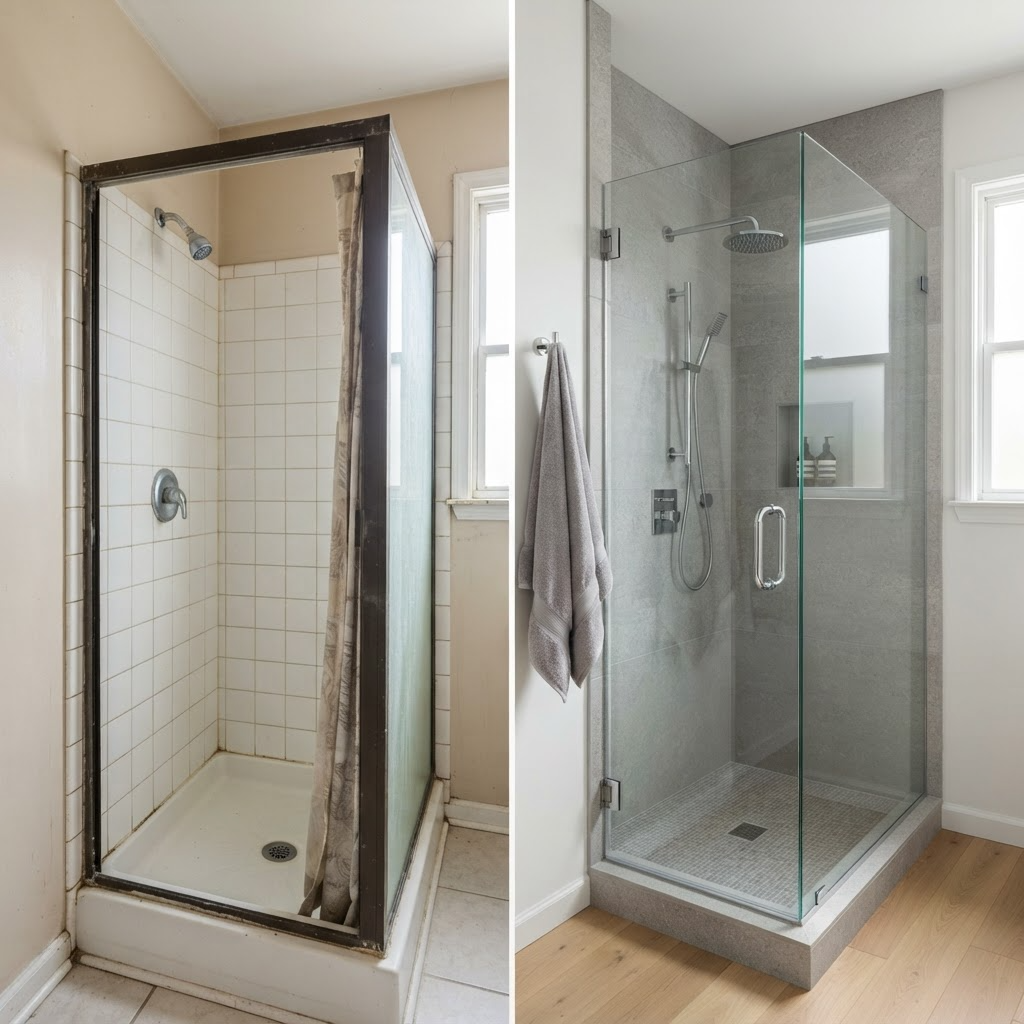
A leaking shower isn’t just an annoyance. Every time water escapes beyond the shower barrier — whether through a failing pan, deteriorated caulk, or cracked tile — it soaks into the subfloor, wall framing, and insulation behind the walls. Patch the visible caulk and you fix the symptom. The water that already got through? It’s still there.
Repeated leaks are a strong sign that your shower’s waterproofing system has broken down. Modern showers use membranes and properly sloped pans to direct water toward the drain, but older installations relied on materials that degrade over time. If you’ve had a plumber or contractor patch the same leak more than once, replacement is almost certainly cheaper than continued repairs.
HomeAdvisor reports that water damage repairs in bathrooms commonly range from $1,000 to $5,000 or more depending on how far the moisture has spread. A new shower installation, by comparison, typically costs a fraction of what prolonged water damage remediation runs once drywall, subfloor, and framing get involved.
Surface mildew on grout lines is normal and manageable with regular cleaning. But when mold returns within days of scrubbing — or when you notice black, green, or gray patches in corners that no cleaner seems to touch — you’re dealing with something that lives behind the wall, not just on the surface.
The EPA’s mold guidance is clear: if mold keeps coming back, the moisture source hasn’t been eliminated. In a shower, that almost always means water is breaching the tile, pan, or grout and feeding mold colonies inside the wall cavity. No amount of bleach spray fixes that. The only real solution is removing the shower, treating the affected framing and drywall, and installing a properly waterproofed replacement.
Beyond the structural concern, mold in bathrooms creates indoor air quality problems that affect the whole household. This isn’t a cosmetic issue — it’s a health issue. If your shower has persistent mold that returns faster than you can clean it, that’s one of the clearest signs it’s time to replace your shower rather than fight a losing battle with a spray bottle.
Grout and caulk are the front-line defense against water intrusion in any tiled shower. They’re also the first things to go. Grout cracks from tile movement and settling. Caulk shrinks and pulls away from corners. Both degrade from constant exposure to water, soap, and cleaning chemicals over years of use.
Small cracks get resealed. That’s normal maintenance. But when grout crumbles out in chunks, when caulk peels away from the wall no matter how many times it’s reapplied, or when tiles start to shift or feel hollow underfoot, the substrate underneath has likely been compromised. At that point, regrouting is just decorating over a structural problem.
The InterNACHI bathroom inspection checklist specifically flags deteriorated grout and caulk as indicators of potential water damage behind shower walls — the kind of finding that shows up in home inspections and triggers repair negotiations. If your shower looks like it would fail an inspection, it’s probably past its serviceable life.
Hard water staining, rust, and mineral deposits are common in the Chicago suburbs because of the regional water chemistry. Most of it scrubs off with the right cleaner. But when staining has penetrated the surface of fiberglass, acrylic, or porous tile — or when rust shows up from corroding fixtures or a deteriorating shower pan — cleaning accomplishes nothing lasting.
Etched or permanently stained surfaces are also sanitation concerns. Bacteria and biofilm cling more easily to rough, degraded surfaces. A shower that looks dirty the day after you clean it isn’t just aesthetically frustrating — it’s harder to keep genuinely clean.
If your shower basin, walls, or floor have staining that’s become part of the surface rather than something sitting on top of it, replacement gives you a genuinely clean start with modern, non-porous materials that resist staining and bacterial growth far better than older materials.
Design matters, but function matters more. A lot of older showers in Lake and McHenry County homes were built around a bathtub-shower combo that made sense for young families with small children. As households change — kids grow up, homeowners age, mobility becomes a consideration — the same setup that worked twenty years ago creates real problems.
A narrow tub-shower combo is hard to use safely for anyone with limited mobility or balance issues. Stepping over a tub wall to shower is a fall risk. According to the National Kitchen and Bath Association, accessibility and aging-in-place features are among the top drivers of bathroom remodeling decisions nationally, and that trend is particularly strong among homeowners 50 and older.
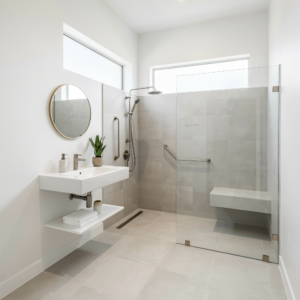
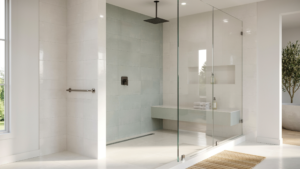
Upgrading to a walk-in shower or a tub-to-shower conversion solves both the safety concern and the functional mismatch in one project. This isn’t vanity — it’s making your bathroom work for how you actually live.
Low water pressure specifically in the shower — when pressure elsewhere in the house is fine — often points to mineral buildup inside the showerhead or supply lines. That’s a fixable problem. But when drainage is slow and stays slow despite clearing the drain, the issue frequently lives in the drain assembly itself, the shower pan, or the slope of the floor — all of which require more than a bottle of drain cleaner.
Standing water in a shower, even temporarily, accelerates every other problem on this list. It puts constant pressure on grout and caulk seams, feeds mold growth, and keeps surfaces wet far longer than they should be. A shower that doesn’t drain properly isn’t working the way it’s supposed to, and patching it repeatedly costs more over time than a clean replacement.
This is the one that moves a replacement from optional to urgent. If the floor around or inside your shower feels soft or spongy underfoot, water has been reaching the subfloor long enough to compromise it. Same goes for bathroom walls adjacent to the shower that feel soft when pressed, or baseboards and trim that show visible rot or discoloration.
Structural water damage doesn’t get better on its own. Wood rot spreads. Weakened subfloor puts stress on floor joists. Left unaddressed long enough, what started as a failing shower becomes a floor replacement, a mold remediation project, and possibly a structural repair — all at once. Angi’s shower remodel cost data shows that the cost of a straightforward shower replacement is considerably lower than a full bathroom restoration that includes structural repair.
If you press on your shower wall and it gives, or if you notice soft spots in the floor near the shower base, get a professional assessment immediately. This isn’t a watch-and-wait situation.
Cost is one of the first questions homeowners ask, and it’s a fair one. Angi’s walk-in shower cost data for the Chicago area puts the typical range for a walk-in shower installation between $3,500 and $15,000 depending on size, materials, and complexity. A tub-to-shower conversion, per HomeAdvisor, typically falls between $1,200 and $8,000.
The wide range reflects real variables: tile selection, fixture quality, whether structural repairs are needed, and the size of the shower footprint. What those ranges don’t include is the cost of doing nothing — ongoing repairs, water damage remediation, or the mold testing and treatment that follow a shower that’s been leaking behind the wall for a year or more.
Transparent pricing upfront, without the upsells that come from big-box retailers or national chains, is exactly what homeowners in this area deserve. EZ Bath N Shower provides clear, itemized estimates before any work begins — so you know what you’re getting and what it costs before committing to anything. Visit the shower replacement page to learn more about what the process looks like from start to finish. If you’re also wondering how long the process will take, check out How Long Does a Shower Installation Take? — or if you’re still looking for the right contractor, How to Find a Trusted Tub to Shower Conversion Company Near You is a good place to start.
Not every problem demands a full replacement. A single cracked tile with solid substrate behind it? Repair it. A showerhead that needs replacing? Swap it out. The dividing line is whether the core structure — the pan, the waterproofing membrane, the substrate, and the drain — is still sound.
When those foundational elements are compromised, repair becomes a cycle of temporary fixes that adds up fast. Recognizing the signs it’s time to replace your shower — rather than patch it again — is the difference between spending money on a lasting solution and spending money on delays.
A good contractor gives you an honest assessment. If repair is the right call, they’ll tell you. If the shower has reached the end of its life, they’ll tell you that too, along with exactly what replacement involves and what it costs.
On This Page Introduction Conclusion Related Services Frequently Asked Questions What shower is best for aging in place near Grayslake IL? For many homeowners aging
On This Page Introduction Conclusion Related Services Frequently Asked Questions Ready to Transform Your Bathroom? Schedule Your Free In-Home Estimate Today Free In-Home Estimate
On This Page Introduction Conclusion Related Services Frequently Asked Questions Ready to Transform Your Bathroom? Schedule Your Free In-Home Estimate Today Free In-Home Estimate